

Quick answer
Yes — swimming is permitted in Killarney's lakes, and the park itself costs 0 EUR to enter, with grounds open 00:00–23:59 daily. Lough Leane, Muckross Lake and the Upper Lake are unsupervised, with no lifeguards and cold, deep glacial water. Arriving between 08:00 and 10:00 gives the calmest shoreline at Ross Castle.
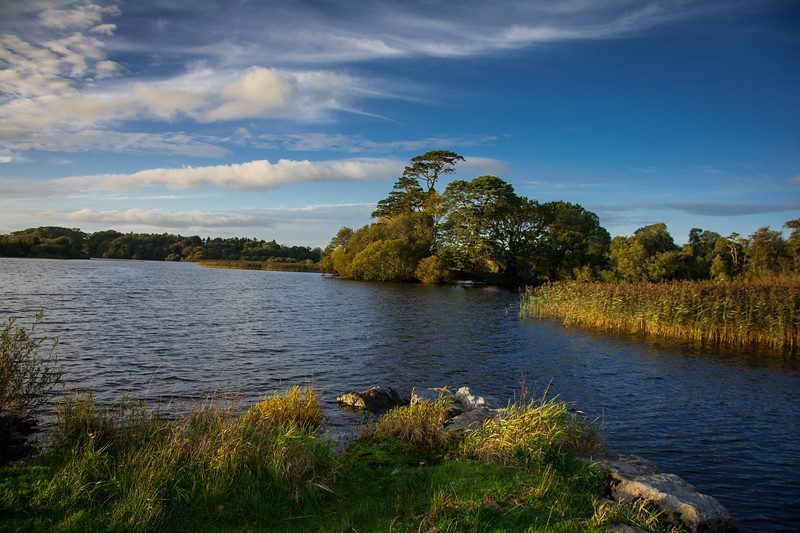
Lough Leane holds a fish found nowhere else on Earth. The Killarney shad, a landlocked herring cut off from the sea when the last glaciers retreated, survives in this single body of water. That oddity hints at what visitors are actually dealing with when they ask, can you swim in Killarney Lake. These are cold, deep, biologically sensitive glacial lakes inside a protected landscape — not a managed bathing resort. Killarney National Park contains three connected lakes. Lough Leane, known in Irish as Loch Léin, is the largest at roughly 19 square kilometres and spreads below Ross Castle and the oakwoods of Tomies. Muckross Lake is smaller but far deeper, dropping past 70 metres in places. The Upper Lake sits furthest inland, ringed by Purple Mountain and the eastern spurs of the MacGillycuddy's Reeks. Water passes between them at the Meeting of the Waters and under the Old Weir Bridge. All three are fed by mountain streams, which is why surface temperatures stay bracing through August. Wild swimming in Killarney National Park is unsupervised rather than prohibited. No stretch of shoreline is designated as a bathing area, there are no lifeguards, and changing facilities do not exist at the water's edge. The entry points that see regular use cluster near Ross Castle, along the Muckross Lake shore, and at small gravel inlets on the Dinis loop. Water clarity is high, but depth drops away quickly from most banks, and the lakebed shelves unevenly. Swimmers also share the surface with traffic: rowing boats, kayaks and the launches that run the Lakes of Killarney boat tours between Ross Castle, Innisfallen Island and Dinis Cottage. Many people who arrive asking can you swim in Killarney Lake finish the day on the water rather than in it. The lakes present themselves differently from a boat — Innisfallen's ruined abbey, the wooded islands off Tomies, the wooded slopes below Torc — and a crossing from Ross Castle reaches ground no shoreline path touches. Torc Waterfall and the Muckross grounds absorb the rest of a morning for those who stay dry. Anyone set on swimming will find the conduct rules, seasonal timing and access logistics covered in the sections that follow.
“The lakes are unsupervised rather than off-limits: glacial water, no lifeguards, and boat traffic sharing every channel.”
Safety Rules: Can You Swim In Killarney Lake?
Swimming in the Killarney lakes is not prohibited, but it is unsupervised open water with cold temperatures, sudden depth changes and active boat traffic. How you enter the water affects your own safety and the condition of a protected National Park habitat.
Do
- Swim with a companion and tell someone your entry point
- Enter slowly to manage cold water shock in deep lakes
- Wear a bright cap or tow float so boats see you
- Stay well clear of Ross Castle and Muckross boat jetties
- Check for blue-green algae notices before entering the water
- Change discreetly and carry all belongings back out with you
Don't
- Do not swim after alcohol or jump from rocks and piers
- Do not enter near moving boats, moorings or rowing routes
- Do not assume shallow edges continue; depths drop off sharply
- Do not wash gear, wetsuits or dishes in the lakes
- Do not disturb nesting birds, reeds or spawning fish habitats
- Do not leave litter, food scraps or towels on shorelines
Opening Hours For Accessing Killarney Lake Areas
Killarney National Park is accessible daily, allowing visitors to reach the lake shores throughout the week.
| monday | 00:00–23:59 | |
|---|---|---|
| tuesday | 00:00–23:59 | |
| wednesday | 00:00–23:59 | |
| thursday | 00:00–23:59 | |
| friday | 00:00–23:59 | |
| saturday | 00:00–23:59 | |
| sunday | 00:00–23:59 |
Entrance Fees To Visit Killarney Lake Sites
Access to Killarney National Park is provided at no cost, allowing visitors to explore the lake areas and park grounds freely. Please note that while entry to the park itself is free, specific internal attractions may charge separate admission fees.
A typical adult pays 0 EUR for park entry, though individual costs may apply if choosing to visit specific internal attractions.
How To Get To Killarney Lake Access Points
Killarney National Park is located in County Kerry, Ireland, with primary access points situated near Ross Castle and Muckross. The park is most easily reached by car via the N71 or by local bus services connecting to Killarney town.
N71 to Muckross or Ross Road
Bus Éireann to Killarney town
Walking paths from Killarney town center
Local Killarney taxi services
Check availability
Frequently asked questions about can you swim in Killarney Lake
Everything you need to know about can you swim in killarney lake